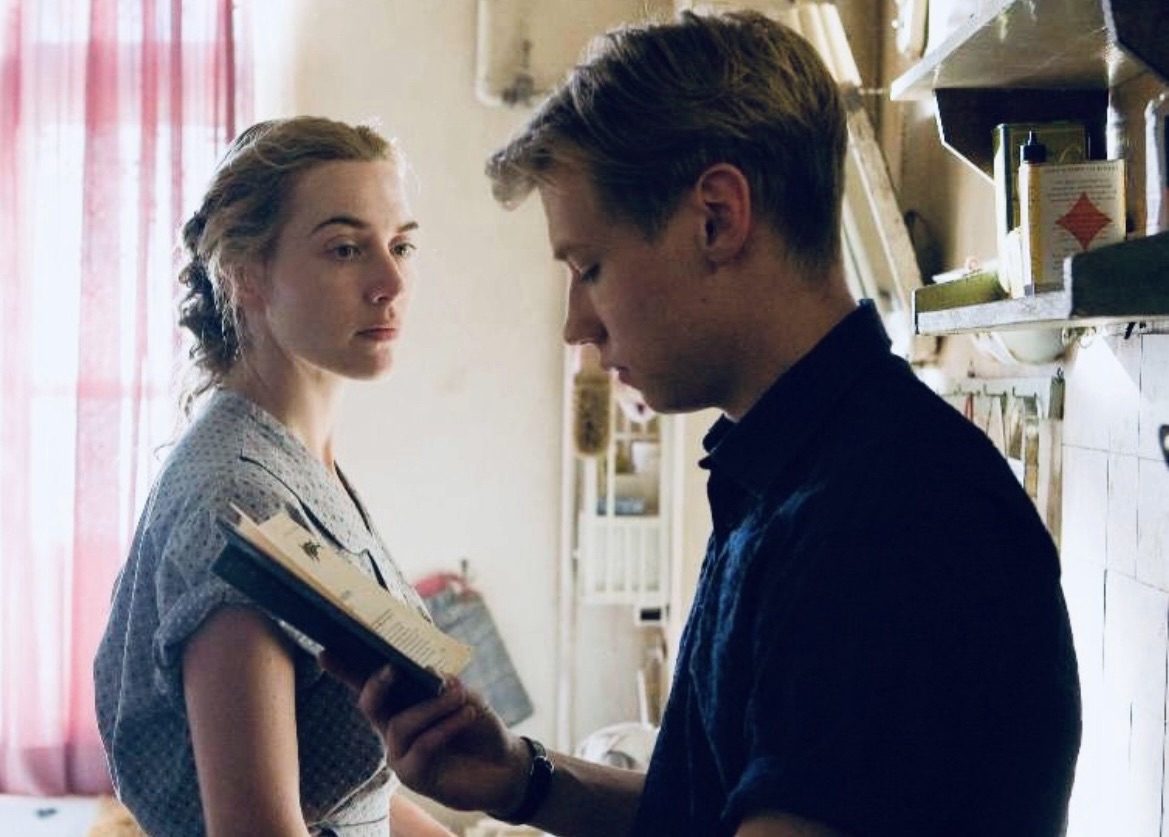
When I first heard about The Reader in 2008, I somehow dreamed up that it was a horror film about a psychic tarot reader.
I was wrong.
I’m not sure where exactly I got that idea but when I saw the film for the first time, I was glad to have been so grossly mistaken. The film was exactly what I’d needed at the time. For me, 2008 was an early period of post-trauma. I was deep into film exploration as a means of therapy — the traditional sort wasn’t available to me and most definitely frowned upon in my family. I needed a way to process.
After my initial viewing of the film, I knew I had to see it again. It sparked something in me but I couldn’t ever quite articulate what that was. What I can say is that never, in any viewing over the last 16 years, did I read this film as a love story. I was too entrenched in my own pain to see it as anything but pure manipulation.
It’s the way Hanna makes herself available to Michael upon that first meeting, the way she zeroes in on his mention of reading, the way she so boldly seduces him — as if 20 years and adulthood don’t separate them at all. There are so many things that make you question her. And by the end, you still never really know.
But Kate Winslet, who plays Hanna, asserts that it is a love story. “These are two people in love. These are two people discovering what it feels like to feel those emotions, number one. It’s a sexual awakening for both of them. To me, it isn’t pornographic; it isn’t manipulative,” she said in a 2008 interview with Charlie Rose. Having recently discovered this interview, I stopped in my tracks. If the love was, in fact, mutual, then… what is this film and what could it actually mean?
I can’t write about my view of this film without saying a bit about myself and my own projections because it has colored my reading of it up until now. In fact, almost no piece of media that I’ve covered on this blog is disconnected from the experience I’m about to relay.
When I was 16, a female teacher set in motion the multi-year process of grooming me. While she was a bit older than Hanna (middle aged versus in her thirties), my teacher’s impact on me was much the same as Hanna’s was on Michael. I grew distant and cold, became disconnected from myself, developed a habit of staring off into this distance as if the answers to all my questions lay just beyond this very dimension. If only I could reach them…
My teacher discarded me as coldly as Hanna discards Michael. One never gets over it and makes every possible effort to never experience it again, including and especially keeping even the most well-intentioned people at arm’s length.
I found such resonance in the way this film depicts what it’s like to live with complex trauma. Rejection and uncertainty, both of which plague Michael, breed a certain bitterness that comes through quite beautifully in this film. And for me, this carefully painted insight into trauma is what sticks.
Now, 16 years later, having largely moved past that pain, I think I understand this film a little differently. I feel called to explore it.
I’m not sure how long this exploration will be or what form it will take but I think I need to write from as many angles as feels productive and healthy.
As much as this film is meant to comment on the relationship between generations in Germany after World War II, to me this reading of the film is tertiary. From a human perspective, two layers of commentary precede and perhaps supersede it: 1) the conflicting nature of unconditional love and 2) the emotional and intellectual resources required to engage in authentic self-expression.
I will, at the very least, explore these concepts in whatever way feels right to me. Stay tuned.
 Des Chimères
Leave a comment