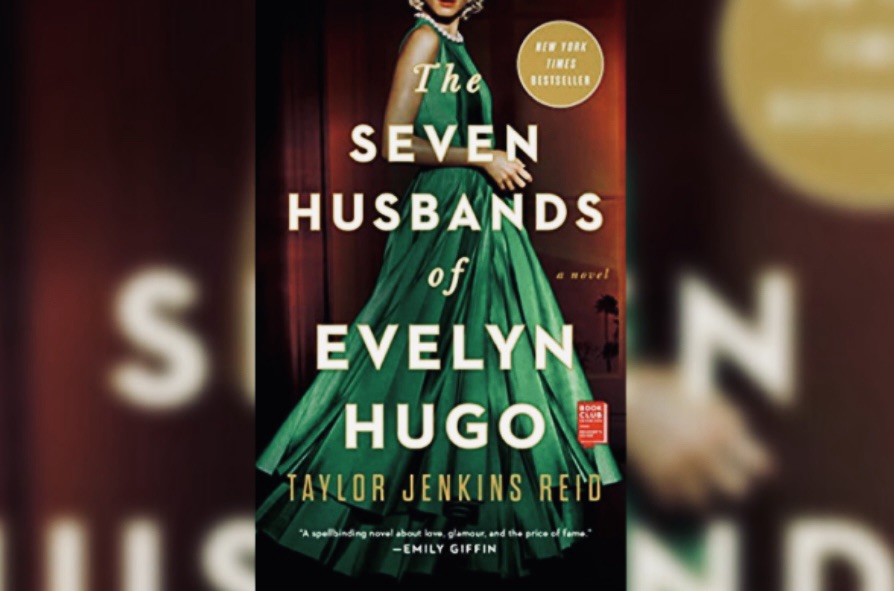
It seems like people have been chattering about The Seven Husbands of Evelyn Hugo for quite some time. I put off reading it because, well, I wasn’t sure I’d be into it. I’d heard here and there that the book had a certain queerness to it. Oftentimes — at least in my experience — that means there’s a minor nod to or mention of queerness. The rest is usually very straight and narrow. Not so with this book. On that front, I was pleasantly surprised.
The story follows an up-and-coming journalist tapped by an actress of yesteryear to write her autobiography and reveal all her secrets. What unfolds is the (queer) love story of a lifetime. It’s worth the read if only to sit and ponder how many of our cultural icons were not as straight as our history books remember them.
As someone fascinated by this very notion, this book was right up my alley. In it, I saw hints of Joan Crawford, Barbara Stanwyck, Marlene Dietrich… and all the rest. I appreciated the sensitivity with which the author conveyed the social challenges of the time and the craftiness queer folks employed to evade detection.
I was also interested in — but not terribly thrilled or surprised by — how the author chose to navigate race and ethnicity in this book. It’s strange to me that a white woman would be so keen to write from a perspective she doesn’t understand. While I can appreciate the attempts to diversify her stable of characters, so much of it felt contrived. Using race as a plot device isn’t the flex this author probably thinks it is.
The main character, who is Cuban, routinely denies her heritage to get ahead in Hollywood and does so without anyone learning who she really is. While it’s true there were a handful of skillfully disguised Hispanic and Latina actresses back in the day, none of them were so well disguised that they didn’t face some sort of backlash or discrimination. And the ones who could and would not shy away from their origins received bottom of the barrel career opportunities. Par example…
Rita Hayworth (of Spanish descent) went to great lengths and pains to change her entire appearance so as to look less “ethnic.”
Maria Montez (from the Dominican Republic) fought tooth and nail to get paid what she deserved and in the end grew tired of being offered roles that portrayed her as “foreign” or “savage” because of where she came from.
Dolores del Rio (from Mexico) was noteworthy in America for just a short time. Before the Hays Code — which prohibited any depiction of interracial relationships — went into effect in 1935, she was well received and well regarded, often seen arm in arm with the likes of Marlene Dietrich and Douglas Fairbanks. After 1935, her career declined and so did her social status.
Rita Moreno (from Puerto Rico) often speaks of the treatment she experienced in the makeup trailer on the set of Westside Story. Being forced to wear brown face alongside her white counterparts in order to appear “more Puerto Rican” left a mark on her and she never lets anyone forget it.
This was the reality of Hollywood then and it most certainly shaped the perception of Hispanics and Latinos in the broader social sphere for decades to come. The Seven Husbands of Evelyn Hugo only briefly touches that reality.
In any case, if queer cinema history is your thing, this book might be worth the read. If you’re looking for a book that gets its depiction of racially marginalized communities right, then probably not so much.
⭐️⭐️⭐️ (3 out of 5 stars)
 Des Chimères
Leave a comment