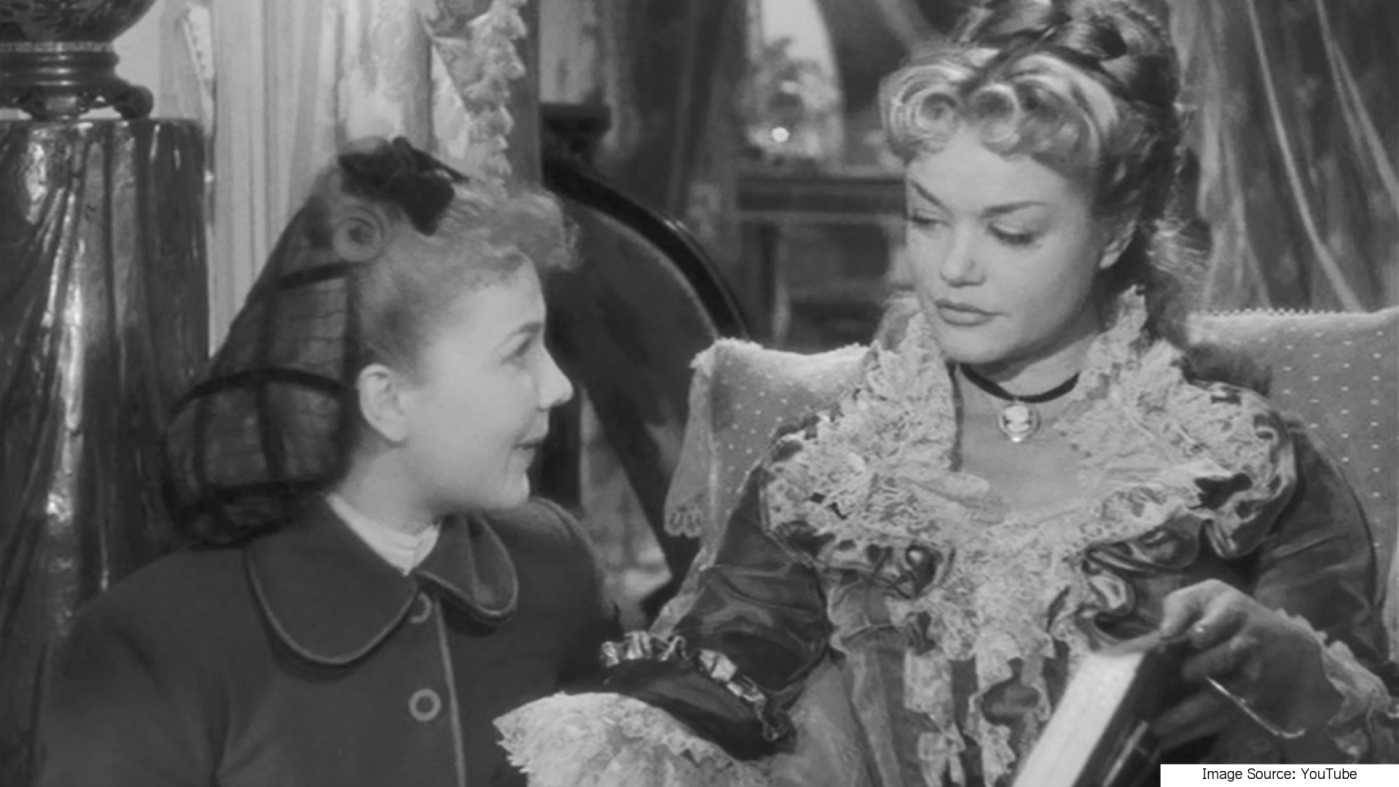
This is the third in a series of five essays about Olivia (1951). These essays are based on personal reflections, research, and observations related to the film. I offer these words only in appreciation of the film and those who made it.
Upon arriving at Les Avons, Olivia is promptly informed that pupils typically fall into two camps: Julistes (those who prefer Julie) and Caristes (those who prefer Cara). Several students make bets about which camp Olivia will fall into, perhaps unaware that she, most of all, shouldn’t have a preference. As the story unfolds, we see Olivia trying the headmistresses on for size. She finds that spoiled Cara is perfectly content to remain still and be pampered, while visions of authoritarian Julie are always fleeting and at a distance.
For Olivia, there’s no easy way to close that distance. Julie is perpetually unimpressed with her work, with her intelligence, with her beauty. There is always someone more diligent, more clever, more attractive than she.
“There is something there, evidently,” Julie says upon examining Olivia’s work, likely in comparison to former student Laura whose intelligence is beyond reach for any of the girls. But still, it’s “un peu pauvre.”
Later, Julie suggests that Olivia “has her points” in comparison to the beauty another student, Cécile, possesses. But then, too, Olivia never quite lives up to this other student. It isn’t that Julie finds Laura or Cécile more desirable, per se; it’s that their positive attributes are all they have to offer. Laura is intelligent but not beautiful, and Cécile is beautiful but not intelligent.
But in Olivia, Julie sees something more. And it’s that something—a nostalgia or potential, perhaps—that calls to Julie and prompts her to invite Olivia ever closer for examination. That examination reveals a bright girl who could one day, with the right encouragement, possess enough grace and wit to turn heads. Perhaps even her own, as we see in the moment below:
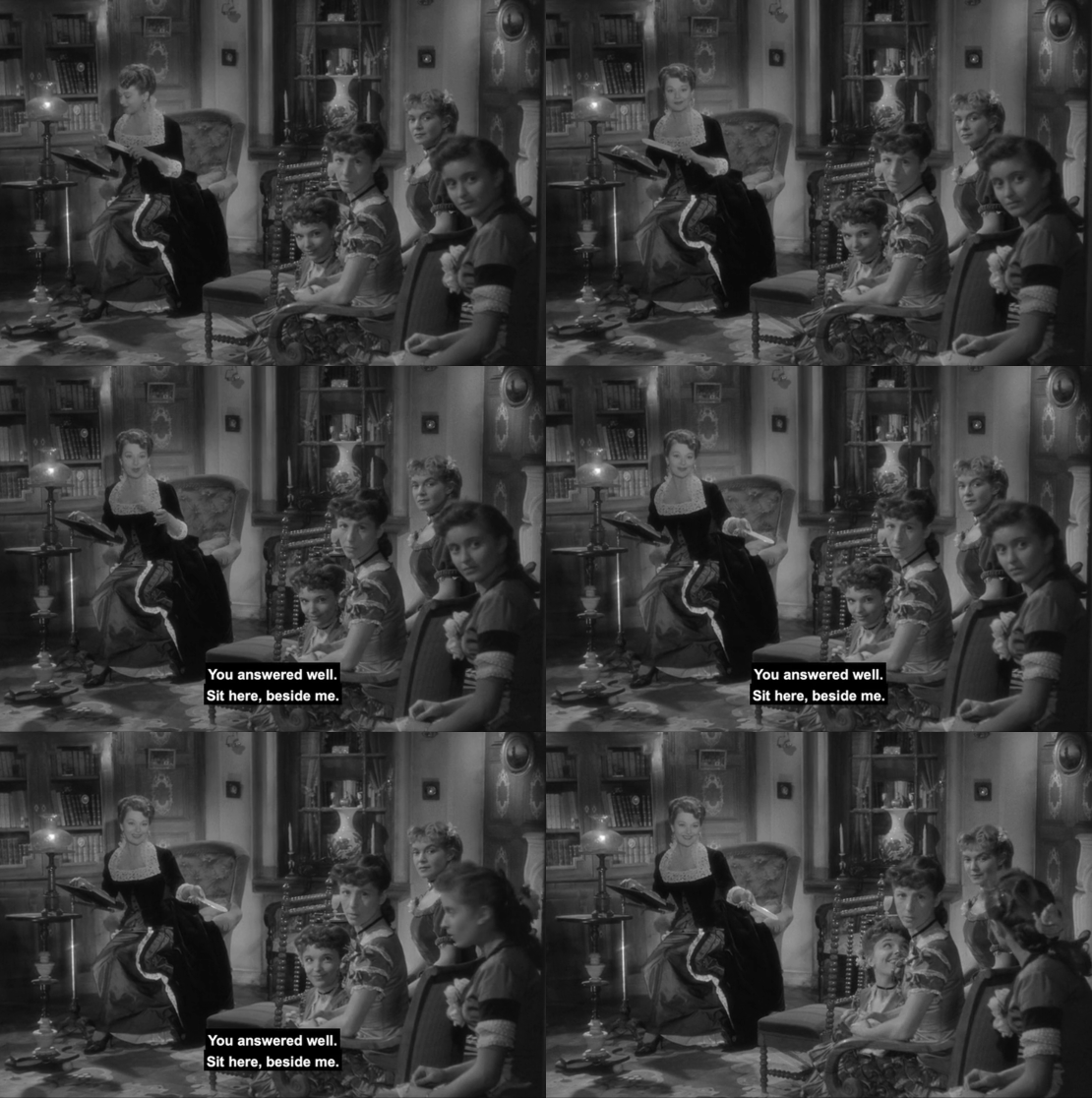
In addition to elevating Olivia as a promising student, Julie also encourages her in other ways. Here, we see Julie inviting Olivia to sit at her right hand after having critiqued the food she was served at table. A vexed and attention-starved Cara sits at Julie’s left hand waiting to cause a scene:
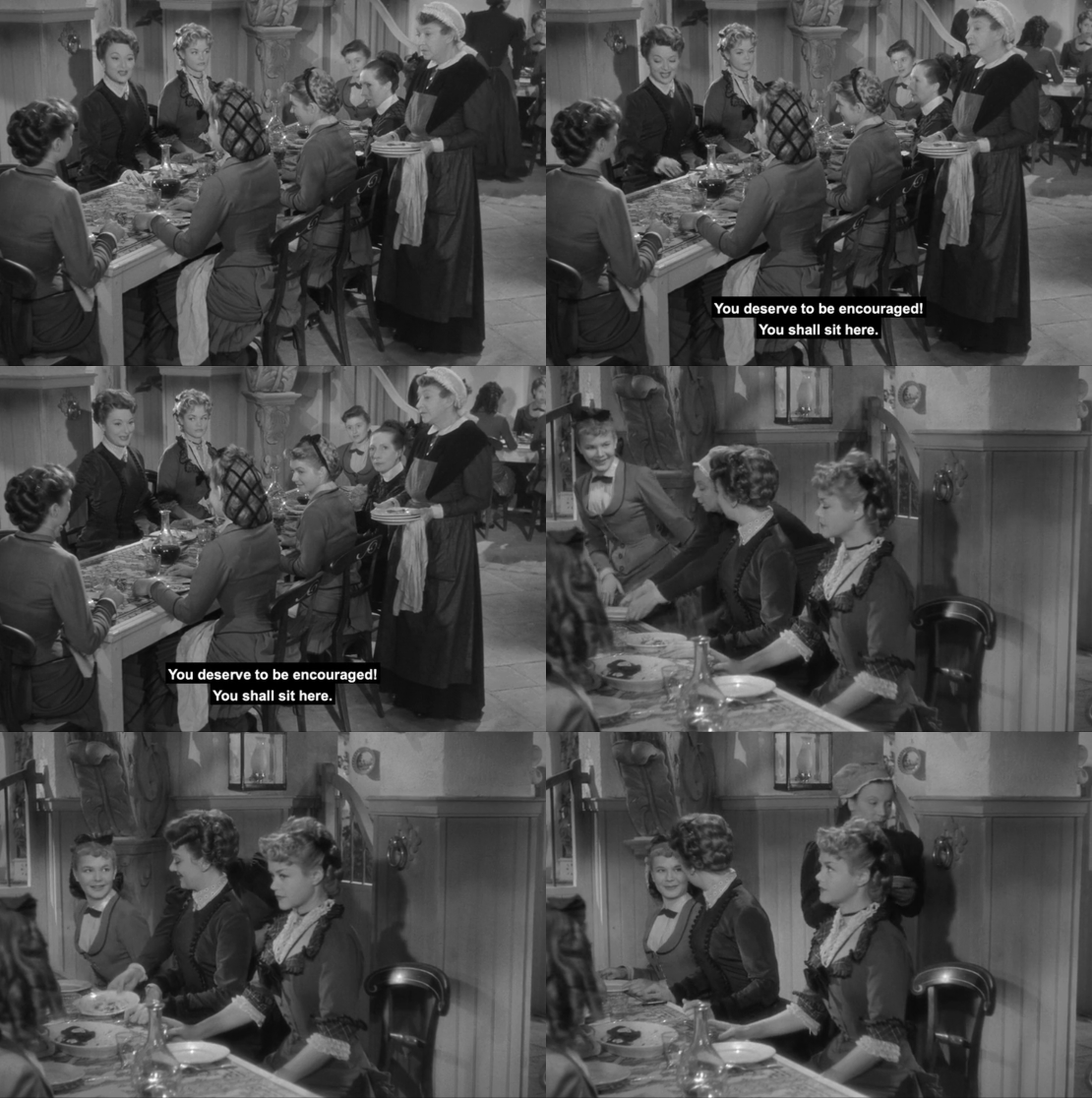
The similarities between Olivia and Cara are hard to ignore: both sport blonde curls, pouting lips, and a penchant for histrionics. Olivia learns to temper her emotions as she rides the waves of validation and rejection from Julie. Cara, however, only responds to perceived slights from Julie, likely as a result of the wedge her right hand woman, Frau Riesner, has driven between them. What happens then is that Julie gravitates to Olivia whose history is entwined with hers, whose appearance and personality are a reminder of something lost, whose eyes watch her with all the love and desire she doesn’t receive elsewhere. But even all this isn’t enough.
As Olivia comes closer into view, Julie recognizes that while her young student has potential, she offers none of the riches in beauty, in grace, in intelligence, or in partnership that perhaps Cara once did. In comparison to the one Julie truly loves, Olivia will always be leagues behind. In essence, all the praise Julie bestows upon Laura and Cécile—and that Olivia so desperately wishes to receive—hinges not on how Laura and Cécile compare to Cara, but on the fact that their potential exists separately from Julie’s love for her. Julie feels at ease remarking on and amplifying what makes Laura and Cécile desirable because she herself could never desire them—they aren’t and couldn’t ever be her Cara.
But there’s an invisible string tying Olivia to Cara. Julie cannot separate the two because her love for Olivia is rooted in her love for Cara and the past they have shared together. Together, Julie and Cara loved this young girl, served as godmothers to her, and awaited her arrival at Les Avons to continue to cultivate her talents.
One of several major hints of this connection between Cara and Olivia comes when Julie bids them both goodnight. Having fought with Cara about whether she truly loves her, Julie gently eases her into sleep with a kiss goodnight:
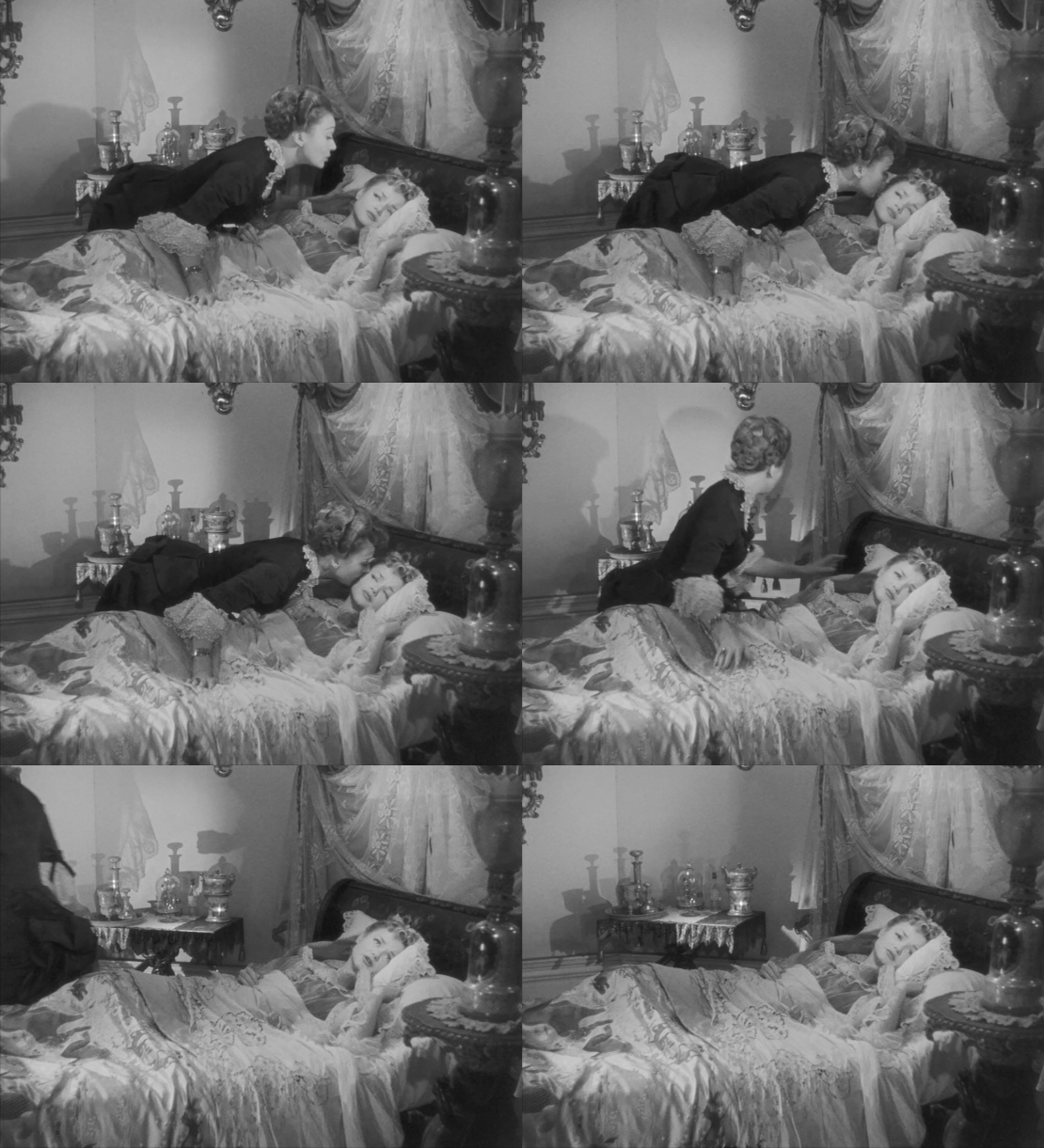
She leaves the room to fetch Cara’s sleep aid only to be drawn away from her task by a flicker of light (a literal burning flame) from Olivia’s room. She goes there to investigate and finds that Olivia is still awake and hoping to recapture something of Julie’s reading of Le Lac earlier that evening. Julie stokes the fires of Olivia’s flame by seductively reciting a few lines for Olivia to relish, then easing the student into sleep with a kiss:
The mirroring of these two scenes demonstrates perfectly what Julie currently has versus what she wishes could be: with Cara, she must be a doting admirer; with Olivia, she is not just the admirer but also the admired.
A few short scenes later, we can almost see the same invisible string carrying Julie along during the ball—Julie passes from the arms of Cara to the arms of Cécile and finally to the arms of Olivia. Here, Julie’s burning desire to be close to and openly love Cara lingers long enough that when confronted with Cécile’s beauty, she passionately kisses her neck. She immediately recognizes the inappropriateness of this gesture (not because it is a student who receives it but because it is Cécile and not Cara), lifts her head and turns her gaze toward a stunned Olivia who watches from afar:
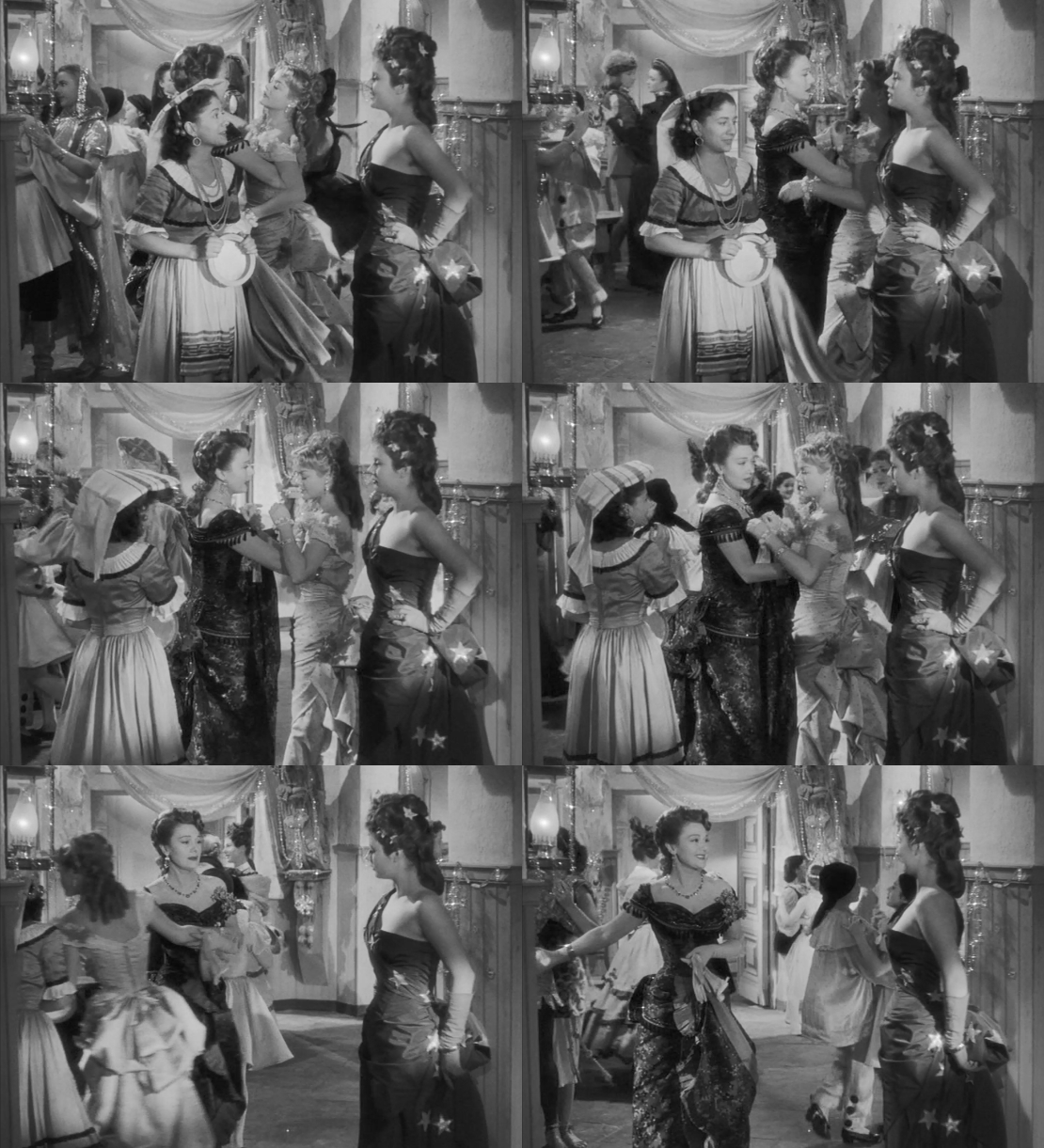
In this instance, we see the machinations of Julie’s mind at work. Olivia is a mere substitute for something lost, something whisked away in the midst of what Julie perceived to be a moment of happiness. Rather than let that happiness die completely, Julie attempts to follow through on it and carry it out, first with Cécile and then with Olivia. This indicates that Olivia is available to Julie in ways that Cara is not—she’s open to receiving Julie’s love, no matter its form. What Julie fails to acknowledge is that Olivia is only available to her because the chasm in her relationship with Cara allows her to be.
From the very start, Olivia represents a binding of two forces seemingly destined to separate. That line I referenced in the second post in this series says it all: “Do you remember me? I’m Julie.” It’s as if to say that she and Cara were inseparable, indistinguishable from one another sometime in the past. That Olivia prefers one headmistress over the other only reinforces the distance between them. It is Olivia who brings their differences—in personality, in desire, and in love—into full view.
The true love story in this film, then, is the one between Julie and Cara. Olivia is merely a stand-in for Cara and through her, we see the shortcomings of both ladies and how the relationship might have disintegrated over time, which I’ll explore in the next post of this series.
 Des Chimères
Leave a comment